


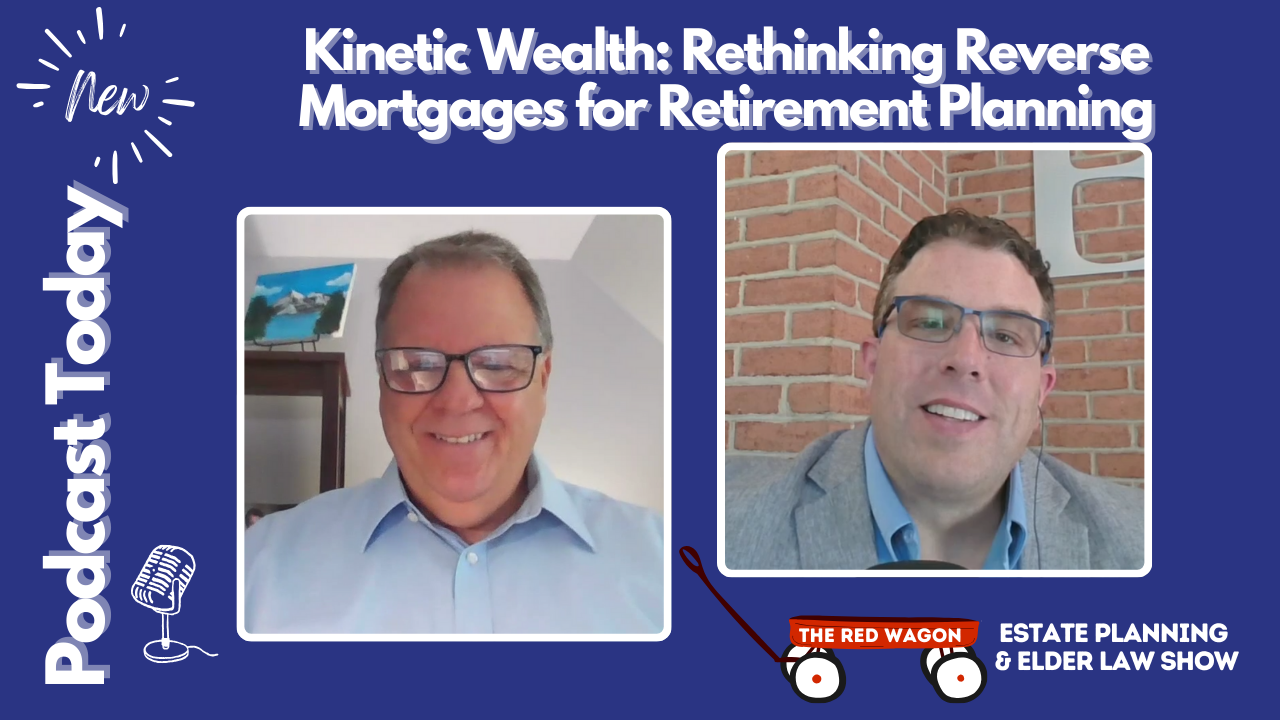
This blog is inspired by a recent episode of The Red Wagon Estate Planning & Elder Law Show, where Jeff Bellomo sat down with Ken Pittz of Advisors Mortgage Services to discuss reverse mortgages, his book Kinetic Wealth, and how this often misunderstood financial tool can play a meaningful role in retirement and long-term care planning.
For many families, the phrase “reverse mortgage” immediately brings hesitation. There is confusion, skepticism, and often fear. As Ken pointed out in the conversation, confusion leads people to shut down and say no before they fully understand the opportunity in front of them.
The reality is that reverse mortgages, when used correctly, can be a powerful planning tool that helps seniors maintain independence, improve cash flow, and protect other assets.
What Is a Reverse Mortgage
At its core, a reverse mortgage allows homeowners to access the equity they have built in their home without having to make monthly mortgage payments. Instead of paying the bank each month, the homeowner receives access to funds that can be used for a variety of purposes.
These funds can help with:
- supplementing retirement income
- covering unexpected expenses
- paying for in-home care
- reducing financial stress in later years
Qualification is often easier than a traditional mortgage because the focus is not on the borrower’s ability to make payments. Instead, the lender evaluates whether the homeowner can maintain the property, pay taxes, and cover insurance.
Clearing Up Common Misconceptions
One of the biggest takeaways from the podcast is how misunderstood reverse mortgages truly are. Many people believe that the bank takes ownership of the home or that the family loses all equity.
That is not how it works.
A reverse mortgage is still a loan. The homeowner retains ownership of the property. When the loan becomes due, typically after the homeowner passes away or leaves the home permanently, the house is sold and the loan is repaid. Any remaining equity belongs to the estate and is passed on to heirs.
This structure is no different than a traditional mortgage in terms of how the estate is handled at the end.
Why Timing Matters
One of the most important insights from the episode is that reverse mortgages are often used at the wrong time. Many people wait until they are financially strained before considering this option.
According to Ken, that is actually the least effective time to use it.
When used earlier in retirement, a reverse mortgage can:
- extend the life of retirement savings
- provide flexibility during market downturns
- reduce the need to withdraw from investment accounts
- create a buffer for unexpected expenses
In other words, it can reshape the entire financial outlook of retirement rather than simply acting as a last resort.
A Tool for Aging in Place
From an elder law perspective, one of the most valuable uses of a reverse mortgage is helping seniors remain in their homes.
Many families want to avoid nursing homes if possible and instead receive care at home. The challenge is cost. In-home care can be expensive, and not every family has liquid assets available to cover those expenses.
A reverse mortgage can unlock equity to help pay for care while allowing the individual to stay in a familiar and comfortable environment.
As Jeff noted in the discussion, certain states treat reverse mortgages very favorably when it comes to Medicaid eligibility, particularly for home and community-based services.
How Reverse Mortgages Fit Into Estate Planning
Reverse mortgages are not just a financial product. They are part of a larger planning conversation.
When integrated properly into an estate and elder law plan, they can support:
- long-term care planning
- Medicaid qualification strategies
- preservation of other assets
- reducing financial burden on family members
- maintaining independence and quality of life
Without planning, families often face crisis decisions. With planning, they have options.
The Bigger Picture
One of the most important points raised in the podcast is that the internet is not a reliable place to make decisions about complex financial tools. It can be helpful for gathering information, but true understanding comes from working with experienced professionals who can apply these strategies to your specific situation.
Every family’s circumstances are different. The right approach depends on health, finances, goals, and long-term care needs.
Take the Next Step
If you or a loved one is approaching retirement, concerned about long-term care, or simply unsure how to make the most of your assets, now is the time to start learning.
Reverse mortgages may not be right for everyone, but for many families, they can be a valuable piece of the puzzle.
To understand how tools like this fit into a comprehensive plan, we invite you to Register for a Free Workshop with Bellomo & Associates. These workshops are designed to give you clarity, confidence, and a clear path forward so you can protect what matters most.