


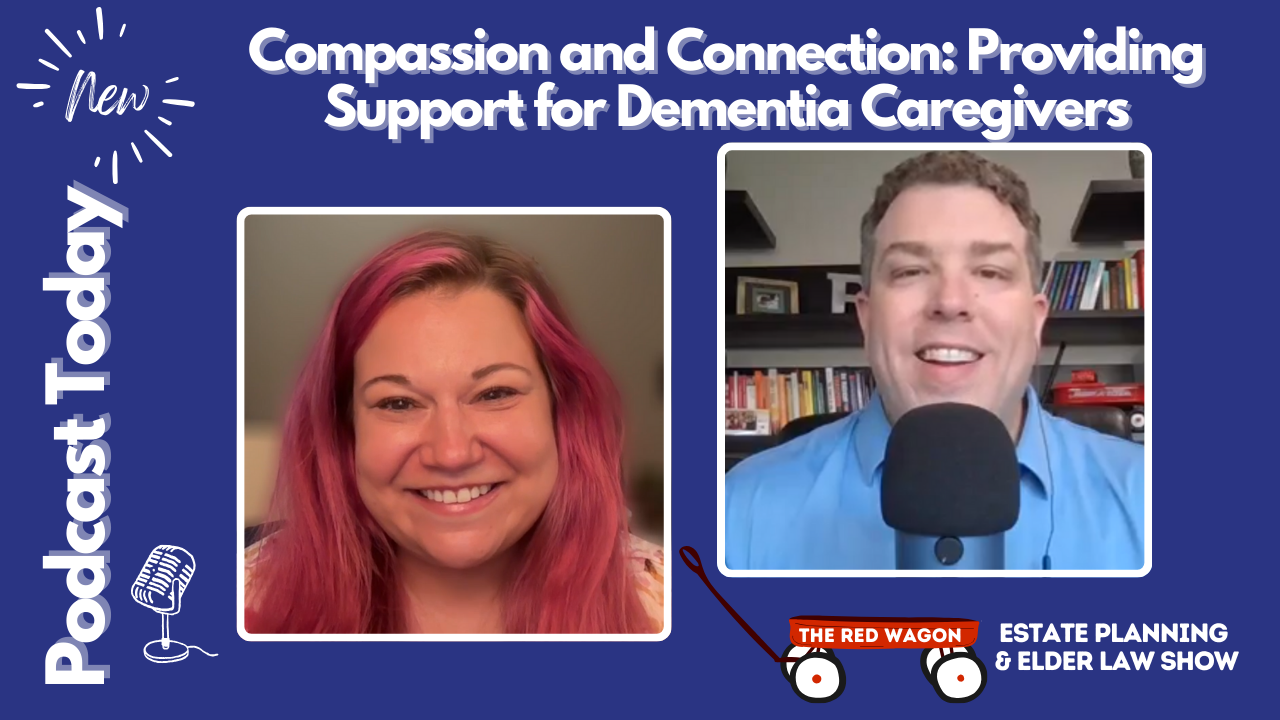
This blog is inspired by a recent episode of The Red Wagon Estate Planning & Elder Law Show, where Jeff Bellomo sat down with Carrie Aalberts, better known as Dementia Darling.
Carrie is a certified dementia practitioner, educator, and passionate advocate for caregivers. Her work is dedicated to helping family members who are caring for someone living with dementia feel seen, supported, and empowered. During the podcast, she and Jeff explored a powerful truth that often gets overlooked. Caring for the caregiver is just as important as caring for the person with dementia.
The Hidden Strain Behind Dementia Care
For many families, dementia care becomes an all-consuming responsibility. The person living with dementia may lose abilities gradually or rapidly. Loved ones step into new roles that may include supervision, medication management, bathing assistance, safety monitoring, behavioral support, transportation, and emotional caregiving.
This constant responsibility creates:
- chronic stress
• sleep disruption
• emotional fatigue
• isolation from friends and hobbies
• financial pressure
• a sense of guilt when asking for help
Carrie shared that caregivers often feel they need to be everything for everyone. They ignore their own health, relationships, and emotional needs. Over time, this leads to burnout, resentment, and even health complications. Her message is simple. Your work matters, and your well-being matters too.
Fighting the Tragedy Narrative
One of Carrie’s goals is to challenge the idea that dementia is only a tragedy. While the disease is undeniably difficult, she believes families also deserve hope, understanding, and dignity throughout the journey. Education can help families understand behaviors, anticipate changes, and respond with compassion instead of fear.
Understanding the “why” behind a behavior can completely transform a caregiving experience. For example:
- Repetitive questions may signal anxiety or confusion
• Wandering can indicate discomfort or a need for stimulation
• Agitation may come from hunger, pain, overstimulation, or fear
By learning what your loved one is experiencing, you can create solutions that reduce frustration for both of you. This is why Carrie praises experts like Teepa Snow, whose Positive Approach to Care helps families better understand the brain changes behind dementia.
Caregivers Need Care Too
During the episode, Carrie emphasized something many caregivers need to hear. You do not have to do this alone, and you are allowed to ask for help. In fact, you need help to maintain your health and the quality of care your loved one receives.
Support can look like:
- attending a caregiver support group
• bringing in respite care for a few hours each week
• accepting help from family members
• working with care coaches, dementia specialists, or counselors
• learning from organizations dedicated to dementia support
Even the smallest breaks can replenish a caregiver’s strength and patience.
Understanding Personality Changes
Dementia can bring dramatic shifts in personality that feel confusing or painful for families. Carrie explained how brain changes, trauma, and degeneration affect emotional expression, impulse control, and communication. Families often take these changes personally, but they are neurological in nature. Education helps caregivers respond with empathy instead of frustration.
Planning to Support the Caregiver and the Person with Dementia
Dementia care becomes significantly more manageable when legal and financial plans are in place early. Families who plan avoid crises, reduce stress, and protect their loved ones’ quality of life.
Estate planning and elder law intersect with dementia in many important ways.
- Powers of attorney allow trusted people to step in and help with care and finances
• Advance directives outline the person’s wishes for medical care
• Asset protection planning ensures resources are available for long-term care
• Medicaid planning helps families prepare for future care costs
• Life care planning coordinates legal documents with ongoing care needs
Caregiving becomes much harder when these protections are missing. Planning early gives caregivers the security and clarity they need to make good decisions.
You Are Not Alone
Whether you are caring for a spouse, parent, grandparent, or friend, you deserve support, resources, and guidance. Carrie Aalberts reminds caregivers that their emotions are valid, their exhaustion is real, and their health needs attention, too.
If you want to explore the resources she mentioned in the podcast, you can visit her website at dementiadarling.com and review the full list of supportive organizations in the show notes above.
If you are ready to understand how dementia care fits into your loved one’s long-term plan, we invite you to register for a Free Workshop with Bellomo and Associates. Our workshops are designed to give families the education they need to prepare, protect loved ones, and plan confidently for every stage of life.